Dry Feet, Clear Labels: A Takeley Porch Pickup That Survives the Wet Months
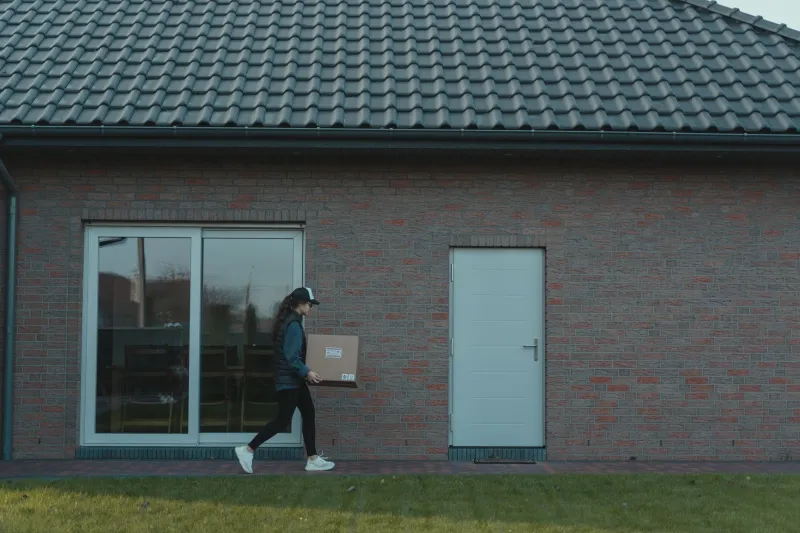
The first properly wet week of November tends to sort out the serious swappers from the hopeful ones. A cardboard box on the front step becomes a damp sponge. A label written in biro turns into a grey smudge. And the person who said they would pop round after work ends up squinting at a soggy bag in the dark, wondering whether that really is the lamp they agreed to collect.
None of this is a reason to stop swapping. It is just a reason to give the handover a bit more thought. In Takeley, where plenty of us are juggling school runs, Stansted shifts and the usual Essex drizzle, a porch pickup point can be a brilliant low-fuss way to pass on a spare kettle, a bundle of kids' books or a barely used picture frame. It just needs to be a dry, labelled, slightly more deliberate version of the old 'leave it on the step' routine.
Start with the shelf, not the sale
The best porch pickups begin before anything is listed. Have a look at your front door and ask a very practical question: where would I put something so that it stayed dry for four hours in sideways rain? For most of us, the answer is not the doorstep itself. It is a covered porch, a sheltered bit beside the bins, a garage shelf near the side door, or a plastic storage box with a lid that actually clips shut.
A simple setup works well. A lidded crate on a raised surface is ideal, because it keeps items off cold paving and away from puddles. If your porch is open to the wind, a cheap lidded box is worth its weight in dry cardboard. Add a small towel or microfibre cloth for wiping down anything that has been out in the air, and keep a roll of bin bags nearby for anything that needs an extra layer of protection. It sounds fussy. In practice, it takes ten minutes to set up and saves a lot of soggy disappointment.
Labels matter just as much as the lid. A strip of masking tape and a marker pen is enough: 'For Sam — blue lamp — paid' or 'Swap for Ellie — book bundle'. If you are running several pickups in a week, a small whiteboard by the door is surprisingly useful. It saves you hunting for a message while a neighbour is standing in the rain.
The two-hour window rule
A porch pickup is not a parcel locker. It works best when both people know roughly when the item will be collected and when it will be brought in if nobody turns up. A sensible winter window is daylight, or at least early evening, rather than a vague 'sometime today'. Try offering two or three clear slots: 'Between 10am and 12pm', 'after school until 5pm', or 'before 7pm if that suits'. It gives the collector a real target and gives you a point at which you can stop worrying about a bag of books getting damp.
If the weather is truly grim, shorten the window rather than cancelling altogether. A one-hour slot on a wet Saturday often works better than a whole afternoon of wondering. And if you are the one collecting, send a quick message when you are setting off. It is a small courtesy that prevents a lot of doorstep guesswork.
Photos that do the talking
A photo is the quiet hero of a rainproof handover. Before the item goes out, take a quick picture of it in its labelled spot. That does two things: it confirms the item is there, dry and ready, and it gives both sides a shared record of what was agreed. When you collect, a quick snap of the empty shelf or the item in your hand is a simple way of saying 'all sorted' without a long back-and-forth.
This is not about turning a friendly swap into a crime scene. It is just practical. Photos cut through the usual winter muddle of delayed trains, early dark evenings and 'I thought you said Tuesday'. If a neighbour cannot find the right porch, a picture of the crate beside the green door is more useful than three paragraphs of directions.
Damp is the quiet thief
Rain does not need to soak an item to ruin it. Damp air, a cold step and a wet bag are often enough to leave books curling, fabric smelling musty or electricals looking suspect. A few small habits make a real difference.
- Put anything fabric or papery in a clean bin bag before it goes into the crate.
- Keep the crate off the ground, even if it is just on a couple of bricks or a wooden pallet.
- Wipe down hard surfaces before handing them over, especially if they have been outside for a while.
- Bring items in at the end of the agreed window rather than leaving them out overnight.
- Avoid leaving electricals in an unheated porch for long periods, even if they are under cover.
For anything particularly vulnerable, it is perfectly reasonable to agree a doorstep handover rather than a porch pickup. The whole point is to suit the item and the weather, not to stick rigidly to a system.
Labels, names and the honour system
A good porch pickup relies on a bit of trust, but it helps to be clear. Put the collector's first name on the label, not just 'reserved'. Keep payment arrangements separate from the shelf where possible, either by bank transfer before collection or by agreeing cash in an envelope with the exact amount. A loose fiver under a soggy plant pot is nobody's idea of a good system.
If you are swapping rather than selling, say plainly what is being swapped and whether anything is coming back the other way. 'Swap for the jigsaw — no cash needed' is clearer than a long message thread. And if a neighbour has asked to collect something for a friend or family member, pop that name on the label too. It avoids the awkward moment when someone arrives to collect a bag that says 'for Chris' but is actually for Chris's dad.
When plans change
No-shows happen. Trains run late, children get ill, and the best-laid Saturday plans dissolve in a text message. The trick is to agree the fallback before it is needed. A simple line works: 'If you cannot make it, just let me know by 6pm and I will bring it in and re-list it.' That is not unfriendly. It is clear, and it saves the item from a night in the rain.
If you are the collector, a quick message is always better than silence. Most people are perfectly happy to rearrange. What tends to annoy neighbours is not a change of plan, but being left wondering whether someone is coming at all. A porch shelf is meant to make life easier, not to become a source of low-level worry.
A small winter kit list
You do not need much to make this work: a lidded plastic crate, a marker pen and tape, a cloth, a few bin bags, and a sheltered spot that stays dry in a gust. A small whiteboard or a stack of sticky notes helps if you are doing several pickups in a week. If your porch is very exposed, a cheap lidded storage box with a couple of bricks on top is a perfectly respectable solution. This is Takeley, not a parcel depot.
The real kit, though, is the etiquette: a clear time, a labelled item, a quick photo, and a message if plans shift. Get those right and the wet winter stops being a problem. It just becomes background weather.
Why it is worth the faff
A porch pickup point will not suit every item or every household. But for the everyday stuff that keeps a local exchange ticking over — a spare slow cooker, a bundle of kids' coats, a box of gardening pots, a lamp that no longer fits the room — it is hard to beat. It keeps things moving without requiring either person to block out an entire afternoon.
And there is something quietly decent about it. A dry crate by the door, a name in marker pen, a neighbour who messages to say they are running ten minutes late: these are small things, but they are the sort of small things that make a village exchange feel less like an online transaction and more like a place where people know how to look after each other's stuff. Even in November. Even in the rain.